01Density
HDF is denser (often 800+ kg/m³) than MDF (around 600–800 kg/m³).
A plain-English guide to high-density fibreboard and where to use it.
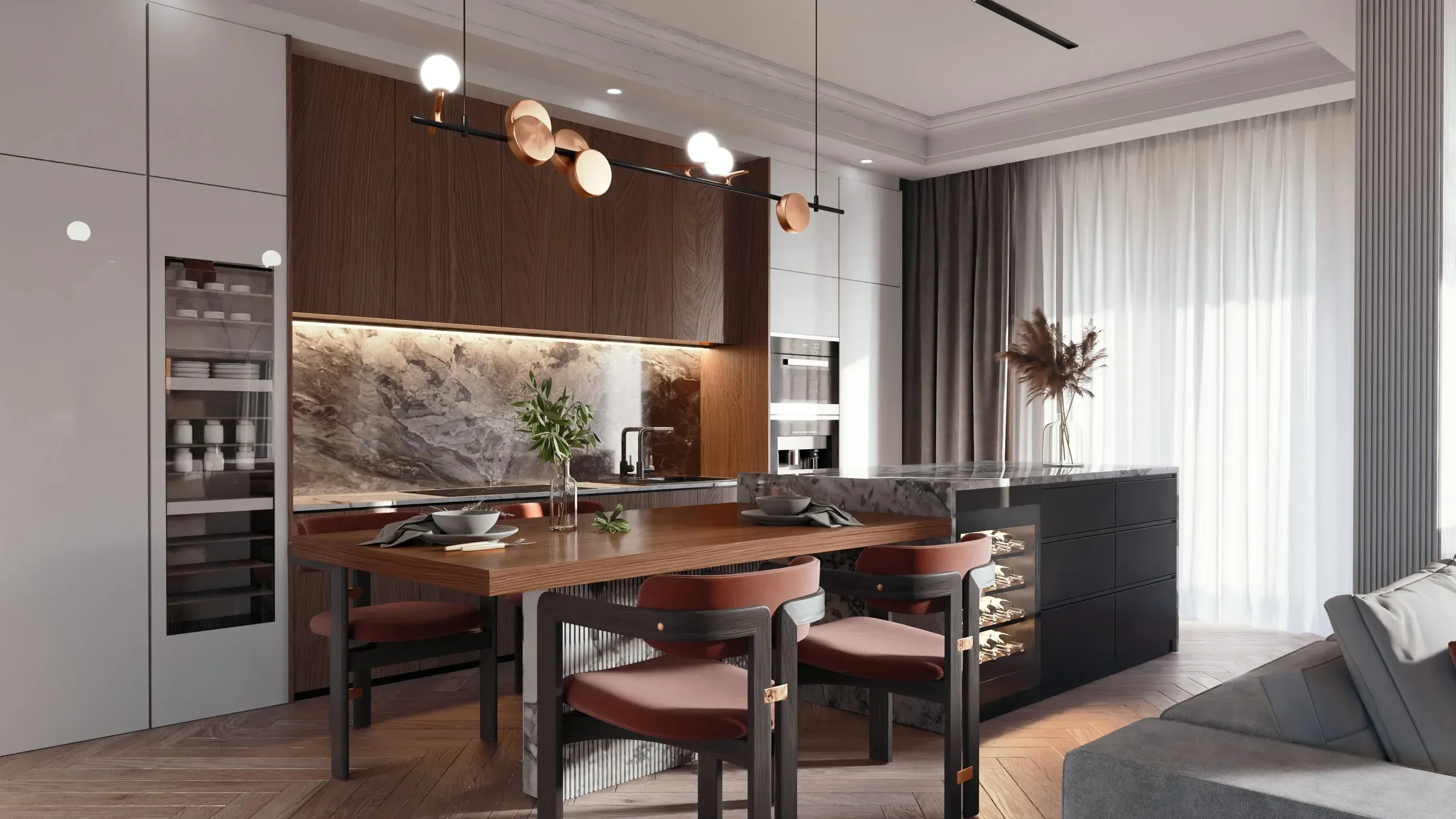
HDF board (high-density fibreboard) is made from fine wood fibres pressed at high pressure, making it denser and harder than MDF. It's used for laminate flooring cores, door skins, drawer bottoms and cabinet backs.
Here are 10 things to know about HDF and how it compares with MDF.
HDF is denser (often 800+ kg/m³) than MDF (around 600–800 kg/m³).
HDF is harder and more impact-resistant.
HDF is usually thin: 3–8 mm.
Most laminate flooring uses an HDF core.
Moulded door skins are often HDF.
Thin, strong panels for backs.
Better than MDF but not waterproof; edges can swell.
Smooth surface paints well.
Too thin for main cabinet structures.
HDF = thinner, denser, harder; MDF = thicker, lighter, easier to machine.
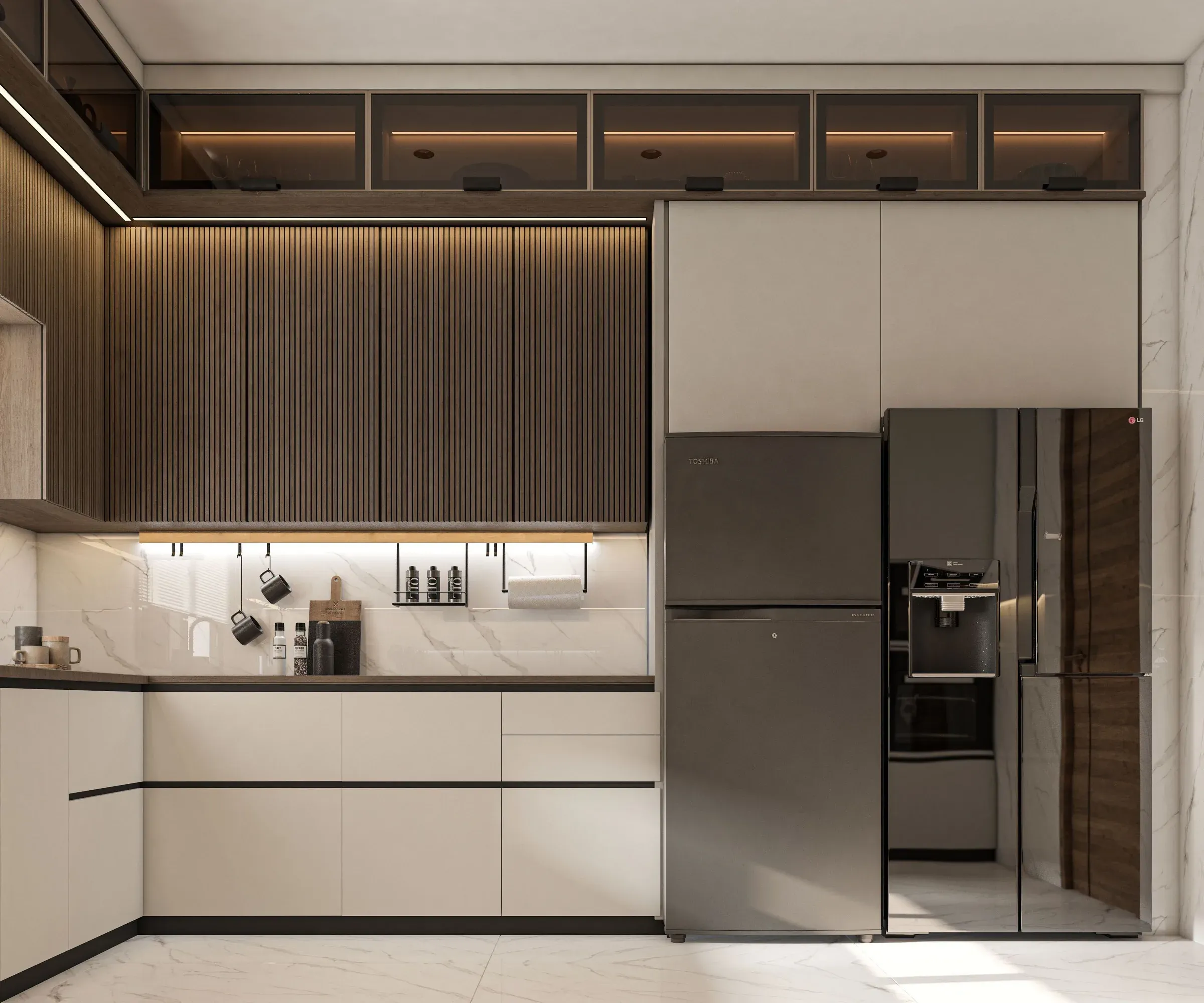
Want the right board used for every part of your kitchen? Our modular kitchen in Kolkata service specifies materials in writing.
FAQs
High-density fibreboard: wood fibres pressed at high pressure into thin, hard sheets.
It's denser and harder, but thinner. Each suits different uses.
No. It's more moisture-resistant than MDF but edges can swell if wet.
Only for backs or drawer bottoms. Use BWP ply for carcasses.
HDHMR board: what it is and when to use it
High-density, high-moisture-resistant board and how it compares with MDF and ply.
Home lighting design: 12 ideas for every room
A practical guide to lighting your home in layers, room by room.
MDF vs plywood: differences and which to choose
When MDF makes sense, when plywood is the only sensible choice, and why.
Ready to plan your home?
Book a free consultation with a designer. No obligation, no pressure.