
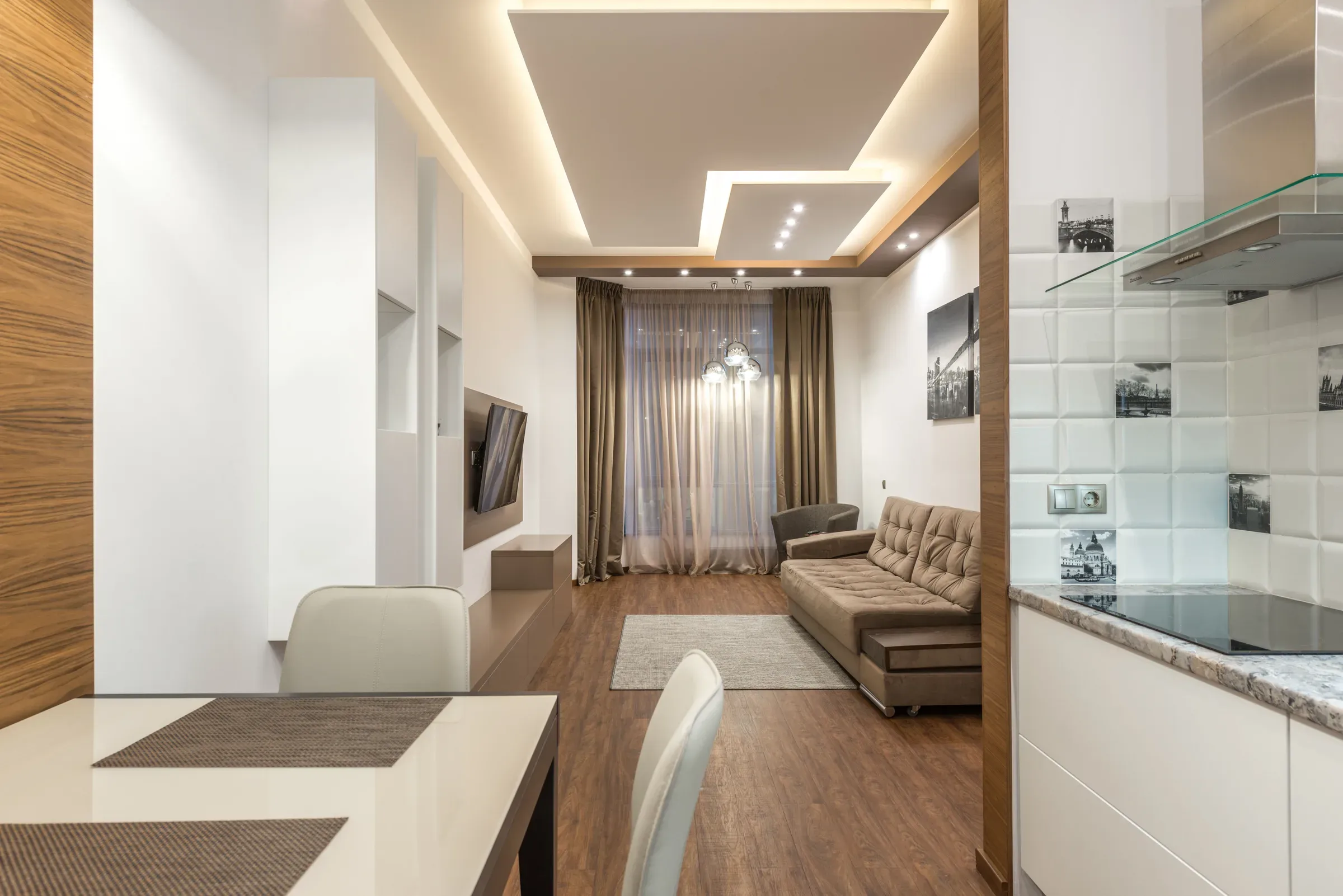
01Gypsum board ceiling
Factory-made boards on GI framing. Smooth, quick to install, fire-resistant. Best for living rooms and bedrooms.
A simple guide to false ceiling materials and styles, and where each works best.
Understanding ceiling types helps you choose the right one for each room. A false ceiling is a second ceiling hung below the main slab, and the material you choose affects the look, cost, durability and how it handles moisture.
Here are 12 types of false ceilings and ceiling materials, with their pros, cons and best uses.
Factory-made boards on GI framing. Smooth, quick to install, fire-resistant. Best for living rooms and bedrooms.
Green MR boards resist humidity. Use in kitchens and near bathrooms.
Applied wet on mesh and shaped by hand. Ideal for curves, domes and mouldings.
Lightweight, waterproof and easy to clean. Best for bathrooms, balconies and utility areas.
Wood or wood-finish panels and strips add warmth. Use treated, sealed material in humid areas.
Wood-plastic composite looks like wood but resists moisture and termites.
Aluminium tiles or baffles are durable and common in offices and kitchens.
Lay-in tiles on a T-grid, easy to access above. Used in offices and clinics.
Frosted or back-lit glass panels for a luminous effect. Premium and used sparingly.
A PVC or fabric membrane stretched on a frame. Seamless and can be back-lit.
A style, not a material: a border around the room with hidden lights.
A raised panel floating over part of the room, lit from its edges.
Not sure which ceiling type suits each room? Our false ceiling in Kolkata team can recommend and install the right one.
| Room | Best material |
|---|---|
| Living room, bedroom | Gypsum board, POP for curves |
| Kitchen | Moisture-resistant gypsum or PVC |
| Bathroom | PVC or aluminium |
| Balcony | PVC or WPC |
| Office | Gypsum, grid tiles or metal |
Also consider ceiling height, how much light you want to hide in coves, and whether you'll need to reach wiring above later (grid ceilings make that easy).
FAQs
Gypsum, POP, PVC, wood, WPC, metal, grid (mineral fibre), glass and stretch ceilings. Styles include peripheral, island and multi-level.
Gypsum for most living spaces, MR gypsum or PVC for wet areas, and POP where you want curves.
PVC, aluminium and WPC are waterproof. Moisture-resistant gypsum handles humidity but not direct water.
PVC panels and simple grid ceilings are usually the most affordable.
Cove lighting: what it is and 11 ideas for your home
Soft, hidden light that glows from a ceiling recess. Here's how cove lighting works and where to use it.
False ceiling light: 12 types, colours and ideas
Choosing the right lights for your false ceiling, from LED strips to spotlights and profiles.
Hall modern ceiling design: 12 ideas for large and L-shaped halls
Ceiling layouts for big halls, two-fan rooms and L-shaped living-dining spaces.
Ready to plan your home?
Book a free consultation with a designer. No obligation, no pressure.