
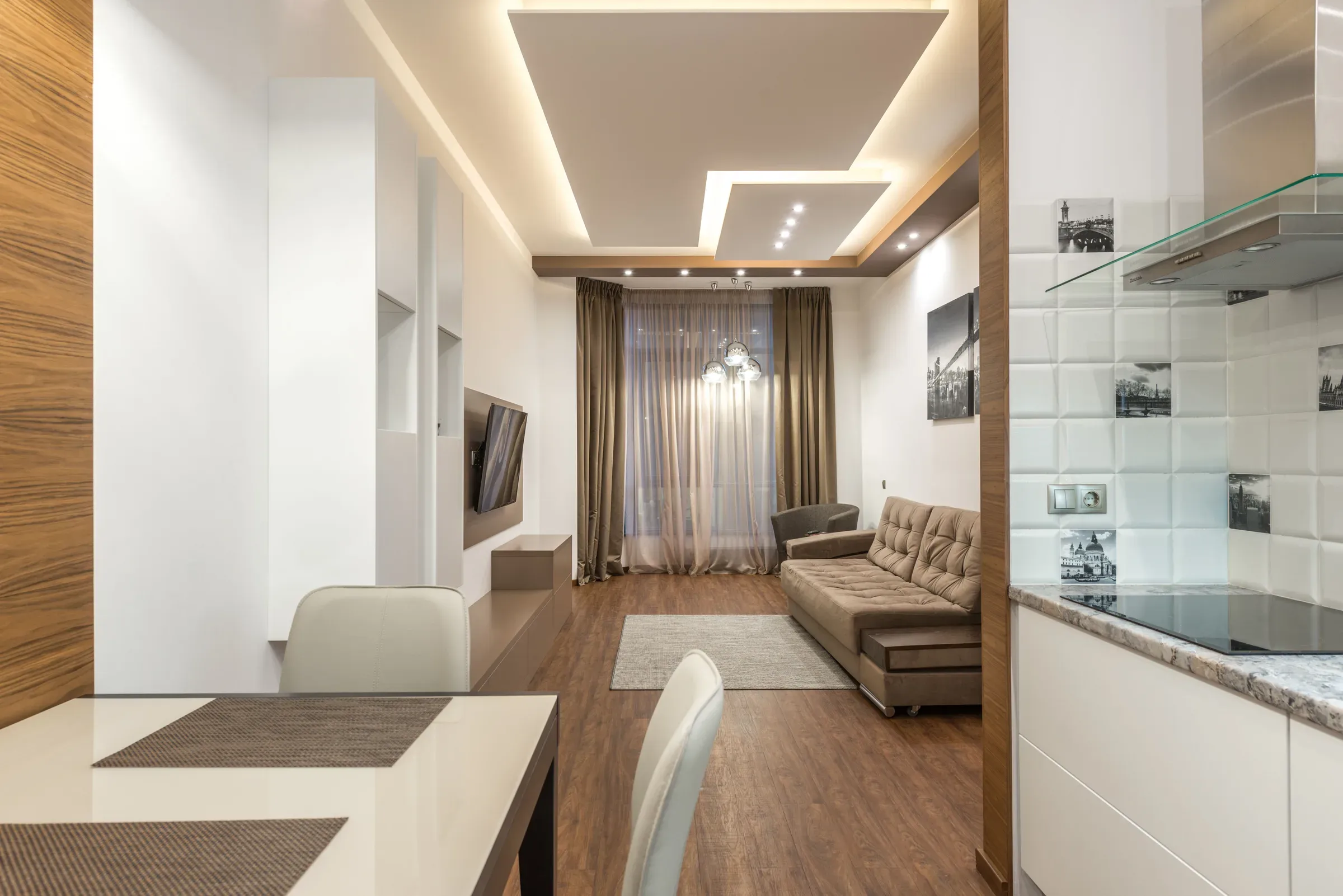
01Classic peripheral cove
An LED strip in a border around the room washes the ceiling with light.
Soft, hidden light that glows from a ceiling recess. Here's how cove lighting works and where to use it.
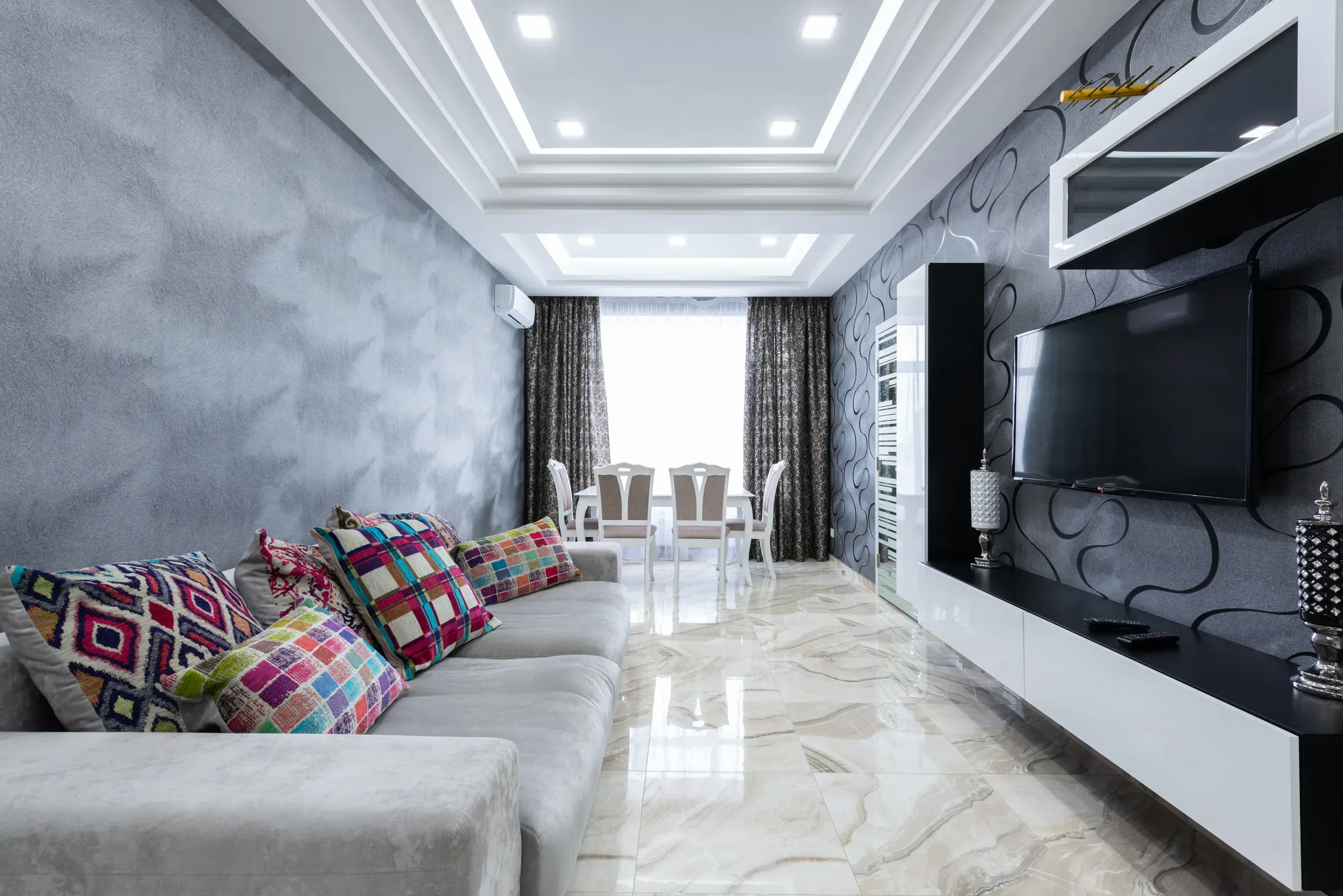
Cove lighting is light hidden inside a ledge, recess or groove, usually in a false ceiling, that bounces softly off the ceiling or wall. You see the glow, not the bulb. That indirect light feels warm and relaxing and makes ceilings look higher.
Here's what cove lighting means in practice, followed by 11 cove light ceiling ideas.
An LED strip in a border around the room washes the ceiling with light.
A floating panel above the bed with cove lights creates a calm halo.
A cove on the wall throws light down a textured or panelled wall.
Coves in two ceiling levels add depth to large halls.
A cove above the wall cabinets adds a soft glow to the kitchen.
Curved coves follow soft ceiling shapes for a flowing effect.
A cove around the TV wall panel reduces eye strain in dark rooms.
Warm cove light above the mandir makes idols glow.
RGB strips let you change colours for festivals or parties. Keep warm white for daily use.
Coves along stair walls light the steps safely.
A cove around a dining-table recess highlights the eating area.
Want cove lighting built into a new ceiling? See our false ceiling in Kolkata service.
FAQs
Light hidden in a ledge or recess, usually in the ceiling, that bounces off surfaces to create a soft, indirect glow.
Usually not on its own. It's ambient light; add downlights or a main fitting for tasks.
Warm white (2700–3000K) for living rooms and bedrooms. Neutral white works in kitchens.
No. LED strips are energy-efficient and use far less power than old tube lights.
False ceiling light: 12 types, colours and ideas
Choosing the right lights for your false ceiling, from LED strips to spotlights and profiles.
Hall modern ceiling design: 12 ideas for large and L-shaped halls
Ceiling layouts for big halls, two-fan rooms and L-shaped living-dining spaces.
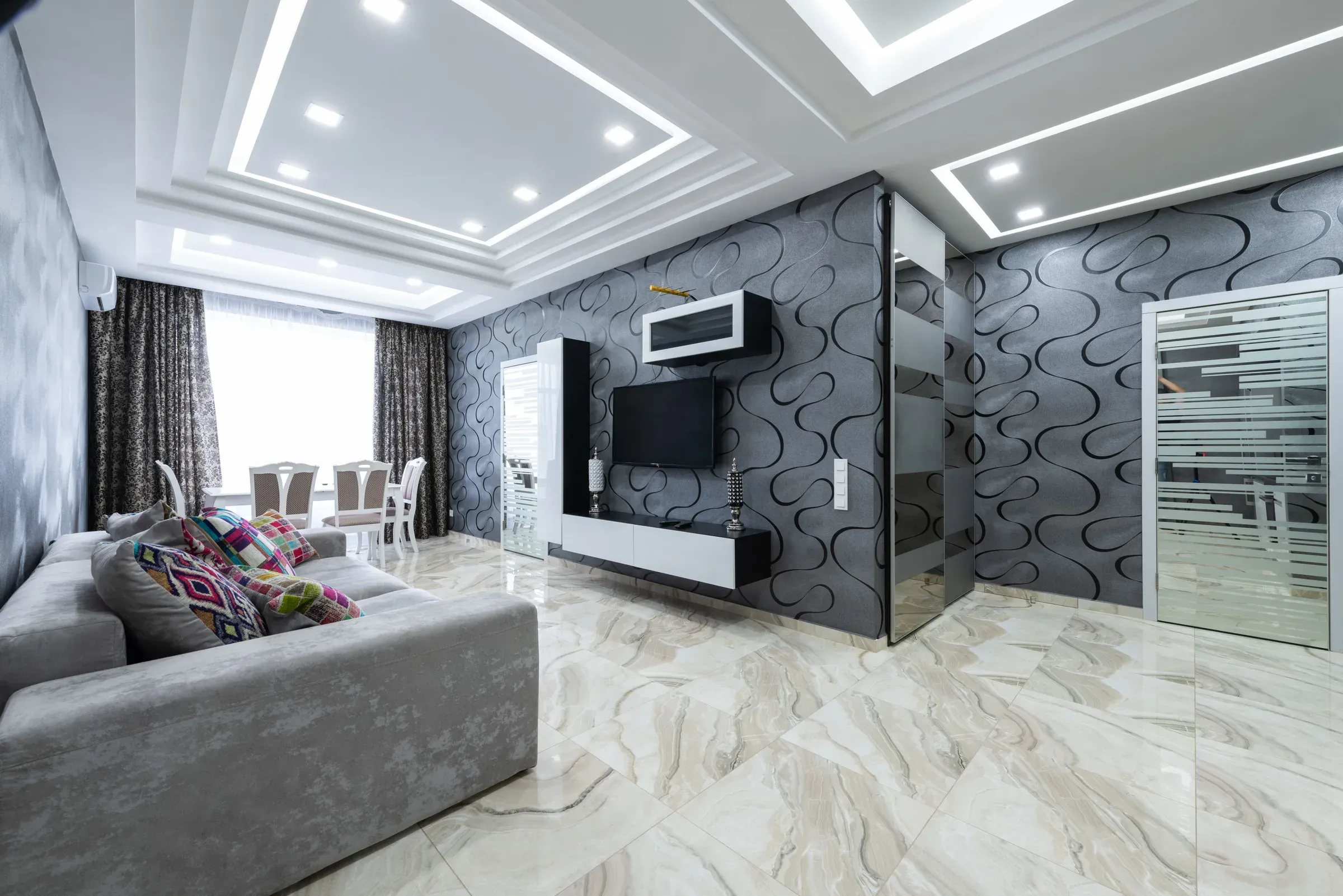
Hall POP design: 12 latest ideas for your living room
POP ceiling and wall designs that make the hall feel finished, from simple borders to layered ceilings.
Ready to plan your home?
Book a free consultation with a designer. No obligation, no pressure.